
 EN
EN


Labor Efficiency and Deployment Speed: The Core Operational Shift
Reducing manual labor dependency and shortening project timelines
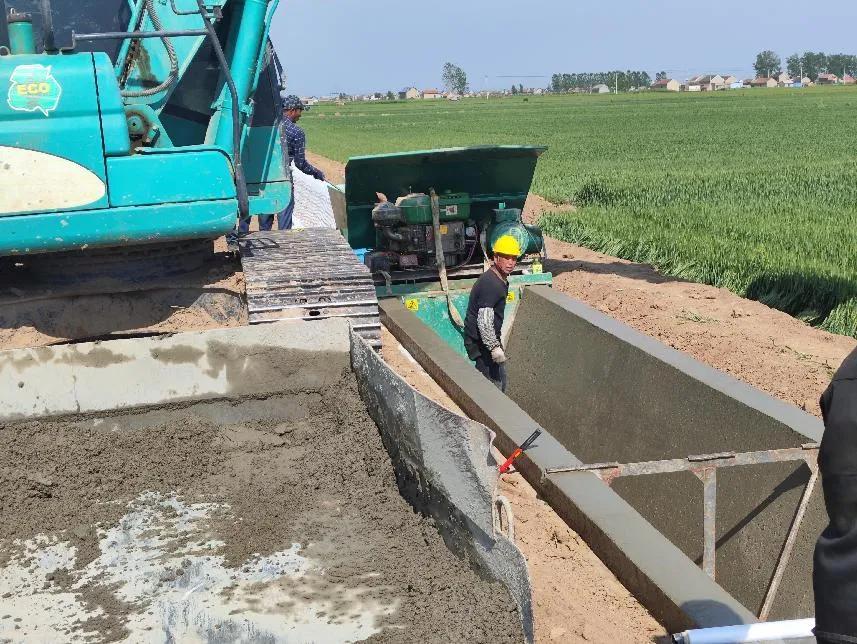
Ditch lining machines these days handle trench digging, laying down liners, and compacting everything all at once, cutting down on the need for manual work by around half compared to old school methods. Jobs that used to take contractors eight whole weeks are getting done in just three now. Field workers have noticed deployment times dropping by about 30%, which means companies can tackle several irrigation channel projects at the same time instead of waiting between them. The real bonus comes from fewer injuries and people quitting because nobody has to do those backbreaking repetitive tasks anymore. This makes operations run smoother over time while still keeping things safe and meeting quality standards.
GPS- and laser-guided precision for consistent liner placement and compaction
When GPS and laser guidance systems work together, they can achieve incredible accuracy down to the micrometer level for trench shapes and where liners are placed. The real time slope control keeps everything aligned within about half a degree either way. And those special compaction rollers guided by lasers make sure the ground underneath is packed evenly throughout, hitting around 99% consistency in how tight it gets compressed. What does this actually mean? No more wrinkles forming, no air pockets left behind, and definitely fewer stress points that used to cause liners to fail early on. After construction is done, there's typically about 40% less water lost compared to when people do installations manually. This kind of performance makes it much easier to meet today's standards for irrigation projects, including things specified in documents like ASABE EP486.1 and ISO 15686-5 which talk about how long infrastructure should last before needing replacement.
From Uncertainty to Predictability in Project Planning
Quantifiable improvements in schedule adherence, water loss reduction, and output forecasting
Traditional ditch construction introduces significant unpredictability: inconsistent trench dimensions, weather-sensitive grading, and human variability routinely cause 20–30% schedule slippage and elevated seepage risk. In contrast, GPS-guided ditch lining machines anchor project execution in measurable outcomes:
- Schedule adherence improves by å 85% through weather-resilient automation and real-time progress tracking
- Water loss reduction exceeds 40% via millimeter-precise compaction that eliminates seepage gaps
- Output forecasting accuracy reaches 95% confidence intervals using embedded soil-compaction sensors and terrain-mapping analytics
Data driven predictability changes how we approach irrigation engineering planning, moving it away from fixing problems after they happen toward adjusting things before issues arise. Traditional methods often miss out on needed flexibility, which can actually raise costs by around 22% according to recent research from IEEE TEMS in 2025. Machine generated data streams allow engineers to model different scenarios based on changing seasons and varying soil conditions. What this means practically is that projects become much more predictable where they used to be full of uncertainties. For instance, cutting down timeline fluctuations by just 10% translates into about $18,000 saved per acre over the long term when it comes to water conservation.
Enabling Integrated Water Management with Subsurface Water Retention Technology
How Modern Ditch Lining Machines Support SWRT Implementation Through Precise Trench Geometry and Liner Integrity
The technology known as Subsurface Water Retention (SWRT) works by placing waterproof barriers below plant roots to stop valuable groundwater from escaping, which is really important for areas that suffer frequent droughts. Today's ditch lining machines make it possible to install these systems properly because they can dig trenches with incredible precision thanks to laser guidance systems. Getting the liner to stick tightly against the soil matters a lot since even small gaps will let water escape and ruin the whole system. The newer equipment includes automatic compaction features that help keep the barrier material pressed firmly against different types of soil, whether it's heavy clay or sandy ground where uneven pressure used to cause problems. According to field tests monitored by USDA-NRCS standards, when SWRT membranes are installed correctly, farmers need about 20 to 25 percent less irrigation water in dry climates. What makes this approach so valuable goes beyond just saving water. When done right, these underground barriers become dependable components lasting many years, allowing engineers to build stable water management systems that fit within broader environmental planning approaches such as those promoted by the Food and Agriculture Organization.
Economic Viability and Adoption Pathways for Modern Ditch Lining Machines
ROI analysis: Upfront investment vs. lifecycle water savings and maintenance reduction
The upfront cost for these ditch lining machines runs well over $200k per unit, but they actually pay off big time when looking at their lifetime value. The precision in how they install linings cuts down water losses by as much as 92%. That means less money spent on pumping, fewer fines from regulators who get upset about leaks, and we don't have to replace things so often. Labor costs drop somewhere between half to three quarters too. And because the compaction is so consistent, roads and other infrastructure last around 15 to 20 extra years before needing major work. All told, most companies see their investment back within five to seven years once all those water savings and lower maintenance bills are factored in. Makes sense really, since this approach matches what the World Bank recommends for funding irrigation projects. They stress looking at total costs over time rather than just getting hung up on what something costs when first purchased.
Scalable adoption models for smallholder and large-scale irrigation systems
The way people adopt these technologies comes in different levels depending on how big their operation is and what they can afford financially. For small farms, there are smaller electric machines available through shared ownership or rental arrangements. These work great for properties less than 50 hectares where farmers don't need much technical know-how to operate them. Big commercial farms go for bigger equipment that moves around on its own with GPS guidance. These machines can lay down more than 300 meters of lined ditches every day throughout large irrigation systems. Several government programs around the world have helped switch money spent on manual labor to renting this kind of equipment instead. Places like India with their PMKSY program and South Africa's NDMC initiative show that when this happens, water stays in the soil about 30% longer in dry areas. What makes this approach special is that everyone from tiny family plots to massive agribusinesses gets access to similar technology, which means better water savings no matter who owns the land or what size their farming operation happens to be.
FAQ
What are the benefits of using modern ditch lining machines?
Modern ditch lining machines reduce manual labor, cut down on project timelines, and increase accuracy in trench building, liner placement, and compaction. They significantly lower water loss and improve project predictability and longevity.
How do GPS-guided systems improve ditch lining?
GPS- and laser-guided systems offer micrometer-level accuracy, ensuring precise trench and liner placement and alignment. This reduces water loss and prevents issues like wrinkles and air pockets, ultimately prolonging the durability of the irrigation infrastructure.
Are ditch lining machines suitable for small farms?
Yes. Smaller, electric ditch lining machines are available for small farms and can be accessed through rental or shared ownership schemes, making the technology more financially accessible and scalable for less extensive operations.
What is the ROI for investing in ditch lining machines?
Though the initial investment is significant, usually over $200k per unit, the decrease in water loss and maintenance costs, alongside increased infrastructure lifespan, means most companies see a return on their investment in five to seven years.