
 EN
EN



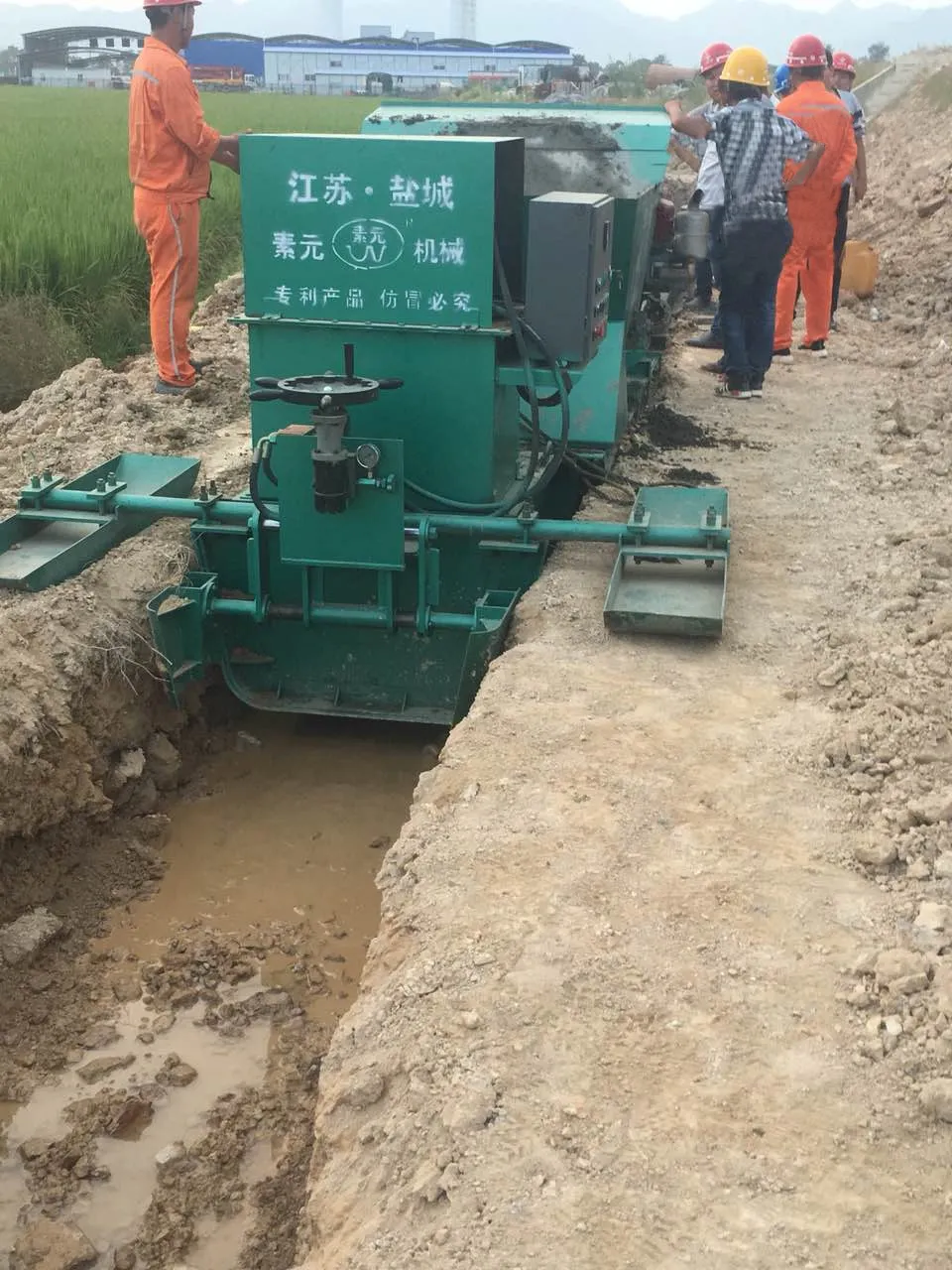
How Automated Ditch Lining Reduces Water Loss and Boosts Irrigation Efficiency
Field-validated seepage reduction: USDA-ARS and FAO data showing 60–85% less loss vs. unlined ditches
Using automated systems for ditch lining cuts down water seepage significantly thanks to those specially designed waterproof barriers. According to research from both the USDA's Agricultural Research Service and the FAO, lined ditches lose between 60% and 85% less water than regular channels without lining, no matter what kind of soil they're in. This matters a lot in dry areas where ordinary ditches might actually lose more than 40% of their water underground. When machines install these linings, they maintain a uniform thickness of HDPE membranes around 1.5 to 2.5 millimeters thick. Manual installation often leaves gaps that let water escape, which can cause problems like waterlogged soil and salt buildup in nearby fields. Looking at FAO's calculations, farmers stand to recover somewhere between 220,000 and 350,000 gallons every year for each mile of ditch that gets properly lined.
Irrigation efficiency gains: from ~45% to 72% in semi-arid pilot zones (India, Arizona) enabled by real-time GPS-guided extrusion
Irrigation gets a big boost when GPS guided extrusion systems are put into place because they maintain just the right shape for water flow. Farmers saw real improvements in places like Rajasthan, India and parts of Arizona where irrigation efficiency jumped from around 45% up to 72% after only two growing seasons. Now about 92% of water actually reaches plant roots compared to just 65% before these systems were installed. What makes this work so well? Three main things happen automatically: the system adjusts itself to match the land's contours within 3 millimeters accuracy; it keeps pouring out polymer without stopping which means no more broken joints; and those special U shaped channels cut down on water loss from friction. Traditional dirt channels with their trapezoid shapes lose about 15 to 20% efficiency over time due to sediment buildup. But with automated lining, performance stays strong even through tough weather conditions. Take Arizona's terrible drought in 2022 for instance these systems kept working perfectly despite all the stress. And the bottom line? Pumping costs dropped by 30%, while farmers reported better harvests across several crop types including corn and alfalfa.
Sustainable Material Selection and Lifecycle Benefits of Automated Ditch Lining
HDPE vs. geosynthetic clay liners (GCLs): performance, durability, and embodied energy in high-seepage soils
Choosing between HDPE and GCLs for automated ditch lining involves weighing different pros and cons depending on site conditions. HDPE stands out for its ability to block water movement in soils where seepage is a problem. It can handle pretty rough terrain too since it resists punctures at around 200 psi or more, which makes sense when working with rocky ground that might damage other materials. On the flip side, GCLs work because of the way bentonite clays naturally seal themselves, but they need constant moisture to function properly. Farmers know this from experience - in dry areas where the material keeps drying out, these liners tend to let more water through after several months, maybe up to 15-20% increase in leakage. Looking at environmental impact, GCLs do have about 30% less energy built into them since they contain natural clay components. However, HDPE has stood the test of time with installations lasting well over 50 years even through harsh winter freezes and summer sun exposure, making it generally more sustainable option for most irrigation projects despite higher initial costs.
Reduced material waste, lower installation energy, and 30%+ lifecycle cost savings versus manual lining methods
The shift to automated ditch lining has really changed how we think about resource efficiency. With precision extrusion tech, there are way fewer cutting mistakes which means about 40% less polymer waste compared to what happens when people do it manually. When installing with GPS guidance, machines actually use around 25% less energy because they move better and don't need to go back and fix things so much. Looking at the bigger picture, these improvements lead to roughly 30% savings across the whole life of a project. Why? Well first, the liners fit so precisely that companies buy less raw material. Second, only one person can operate the system now instead of needing a whole team most of the time. And third, when everything goes together seamlessly without leaks, there's just not as many repair jobs down the road. For big water management projects, this kind of automation simply makes more sense both financially and for our environment.
Climate-Adaptive Performance of Automated Ditch Lining Across Diverse Geographies
Thermal expansion tolerance and freeze-thaw resilience in Himalayan, Andean, and prairie ditch networks
The automated ditch lining systems show remarkable ability to handle tough climates in all sorts of extreme conditions because they're built with materials that can bend and flex plus have very accurate installation techniques. Take the Himalayas for instance, where special HDPE composites that are optimized for density actually stand up to those crazy temperature changes that hit over 30 degrees Celsius each day. These materials only deform about 3% thermally, which means they keep their seals intact when regular linings just give up. Up in the Andes mountains above 3,500 meters elevation, these systems fight off UV damage and deal with quick temperature shifts thanks to polymers that have been specially cross linked to handle the stresses at such high altitudes. Down on the prairies, these linings make it through more than 50 freeze-thaw cycles every year without any heaving problems. That's because GPS guided extrusion creates joints so seamless that ice wedges simply can't get in. All this reliability cuts down maintenance needs by anywhere from 40 to 60 percent compared to old fashioned manual methods in similar weather conditions. For anyone building long lasting water management systems that need minimal upkeep, this kind of consistent performance really makes all the difference.
Optimizing Automated Ditch Lining Implementation: Soil, Slope, and Regulatory Alignment
Decision framework: integrating soil pH, hydraulic gradient, slope stability, and compliance with EPA/ISO 14040 standards
Getting things right on site needs decisions tailored specifically to each location's unique characteristics. The soil should ideally have a pH between 4.5 and 8.5 for best results. When soils get too acidic (below 5.5), polymers tend to break down faster, sometimes up to 40% quicker than normal. For areas where water flows steeply down hillsides (over 6% gradient), we need stronger anchoring systems because these spots face about 30% more water pressure. Slope stability checks usually involve some kind of geotechnical modeling to stop erosion when the ground gets completely soaked. Every design has to follow EPA rules about stormwater management plus meet ISO 14040 standards for looking at materials throughout their entire life cycle. These requirements help ensure that what gets built actually cuts down on environmental harm, somewhere around 25 to 35% less damage than traditional approaches. What makes all this work is combining good drainage function with responsible environmental practices, no matter what kind of landscape we're dealing with.
FAQ
What is the main advantage of automated ditch lining over manual methods? Automated ditch lining offers significant reductions in water loss, improved irrigation efficiency, and lower lifecycle costs due to precise installation, reduced waste, and efficient operation.
How does the choice between HDPE and GCLs liners depend on site conditions? HDPE liners are preferable in rocky or high-seepage soils due to their durability and resistance, whereas GCLs may save on embodied energy but require consistent moisture to be effective.
Can automated ditch lining handle extreme weather conditions? Yes, automated ditch lining systems are designed to withstand diverse climates, from Himalayan cold to Andean heights, providing reliable water management across different geographies.
Table of Contents
- How Automated Ditch Lining Reduces Water Loss and Boosts Irrigation Efficiency
- Sustainable Material Selection and Lifecycle Benefits of Automated Ditch Lining
- Climate-Adaptive Performance of Automated Ditch Lining Across Diverse Geographies
- Optimizing Automated Ditch Lining Implementation: Soil, Slope, and Regulatory Alignment
- FAQ