
 EN
EN


Strategic Planning to Minimize Reinforcement Needs in Large Irrigation Canals
Hydraulic Modeling and Geotechnical Risk Assessment
Hydraulic modeling helps simulate how water flows and where structures might stress out, pinpointing areas at risk like those steep slopes or places with expansive clay soils that need specific stabilization work. Alongside this approach, looking at geotechnical risks means checking things like how water moves through different soils, changes in groundwater levels throughout seasons, and whether there's any earthquake risk that could cause problems for embankments. The numbers tell us something important too: about one fifth to almost a third of all water gets lost through canal seepage according to Water Resources Research from last year, while erosion causes roughly four out of five failures when dealing with unstable ground beneath canals. When we map these potential issues before construction starts, it saves money because engineers don't have to reinforce everything everywhere blindly. Instead they focus on exactly what needs fixing based on actual site conditions rather than applying generic fixes across the board.
Alignment Optimization to Reduce Structural Stress and Reinforcement Demand
Optimal canal alignment leverages natural topography to minimize structural stress, reduce excavation volume, and lower long-term reinforcement demand. GIS-based terrain analysis enables designers to:
- Shorten overall canal length by 12–18%, directly reducing material and labor requirements for lining and support;
- Avoid landslide-prone slopes, fractured rock outcrops, and other geohazard zones;
- Maintain gentle longitudinal gradients (≤0.5%) to limit flow velocity and suppress erosive forces.
Straighter alignments reduce peak water velocity by up to 40%, significantly decreasing turbulent stress on linings and adjacent embankments. This strategic approach lowers reinforcement costs by as much as 35% compared to conventional layouts (Irrigation Science, 2023), while enhancing hydraulic efficiency and long-term maintainability.
Phased Construction and Real-Time Stabilization for Large Irrigation Canals
Sequential Excavation with In-Place Soil Nailing and Shotcrete Support
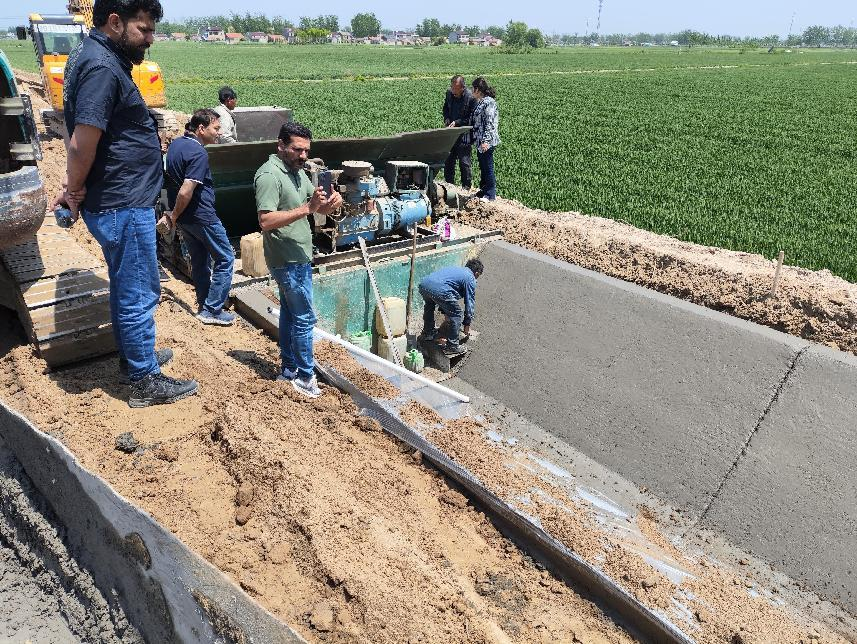
When digging happens in stages about 2 to 3 meters at a time while immediately putting in soil nails and applying shotcrete, it creates a strong top-down stabilization system that works really well. Before making each cut, workers install those soil nails into untouched ground first, which helps anchor everything in place. Then they apply the shotcrete facing pretty quickly after that. What makes this approach special is that it serves two purposes at once: giving temporary support during construction and also providing long term structural integrity. This means no need for those big temporary supports or extra wide safety areas around the site. Contractors typically see around 25 to 35 percent less earth moving work needed, plus almost no sinking of the surface above ground. That's super important when working near existing canals or other delicate landscape features. The shotcrete actually contains tiny fiber optic sensors that track how much stress builds up while filling material back in. Based on what these sensors detect underground, engineers can tweak things like how far apart the nails should be spaced or how deep they need to go. Because there's so little shaking involved and cycles happen fast, projects get finished 30 to 40 percent quicker compared to older methods, especially where erosion is a problem or space is tight.
Advanced Reinforcement Materials and Systems for Large Irrigation Canals
Geosynthetic-Reinforced Concrete Linings: Performance, Durability, and Cost Efficiency
When it comes to concrete linings, adding those polymer grids inside really makes a difference in controlling cracks from forming and spreading. Tests done both in real world conditions and lab settings show these reinforced systems cut down on crack widths and how often they appear by around 35 to 60 percent compared with regular concrete. That means the lining lasts way longer than 25 years even when exposed to constant freezing and thawing cycles plus temperature changes. A recent study back in 2021 looked at lifetime costs and discovered something interesting about maintenance expenses dropping nearly half over two decades when using these special linings instead of standard ones. Plus, tests checking UV resistance showed almost no breakdown after spending 15 thousand hours under harsh sunlight. What's really important here is that the improved strength lets engineers build thinner sections by as much as 30 percent without affecting water flow properties or structural integrity. This translates to less cement needed, lower carbon footprint during production, and ultimately cheaper installation costs for projects across various industries.
Riprap Alternatives and Hybrid Stabilization Approaches
Cellular confinement systems (CCS) along with vegetated gabions present excellent eco-friendly options compared to conventional riprap solutions. What makes them stand out? They retain about 89 percent of sediment while costing around 40 percent less to install, plus they support local plant growth that strengthens slopes as time goes on. When combining different methods like using geotextile underlays together with those articulated concrete blocks, installation can be completed roughly 22 percent faster. These hybrid setups handle water flows reaching speeds of nearly 4.5 meters per second without breaking down. Looking ahead, we're seeing exciting developments such as 3D printed concrete units featuring built-in root channels. Field tests from last year showed these new designs helped establish vegetation 65 percent better than traditional methods. Overall, this represents a growing trend where engineering solutions provide both instant protection against water forces and gradually build stronger ecosystems over time.
Performance Monitoring and Data-Driven Reinforcement Optimization for Large Irrigation Canals
Fiber-Optic Strain Sensing and Digital Twin Integration for Adaptive Reinforcement
Fiber optic strain sensors placed right during construction inside linings, shotcrete facings, and geosynthetic layers can detect tiny deformations at the millimeter level continuously. The detailed data these sensors collect helps spot early signs of cracking, uneven settling, or areas where stress builds up long before any actual damage becomes visible to the naked eye. When connected to what's called a digital twin - basically a living virtual copy of the canal that follows real physics rules - the sensor information feeds into predictive systems. These systems then simulate how different factors like floods, wet seasons, or earthquakes might impact the structure over time. According to research published in the Hydraulic Infrastructure Journal last year, machine learning algorithms trained on past performance combined with live data can accurately predict when reinforcement is needed about 89% of the time. Operators are now moving away from sticking strictly to maintenance schedules and instead making decisions based on actual conditions. This approach cuts down on wasted reinforcement materials by around 34%, saving approximately 22 metric tons per kilometer according to a study by the Ponemon Institute in 2023. What we end up with is a system where reinforcement choices come from real observations rather than just guesses about how structures should behave in theory versus practice.
FAQ
Q: Why is hydraulic modeling important in irrigation canals?
A: Hydraulic modeling is important as it simulates water flows and identifies stress areas, allowing for targeted stabilization efforts and minimizing unnecessary reinforcement.
Q: How do fiber-optic sensors aid in canal maintenance?
A: Fiber-optic sensors detect minute deformations and collect data to predict reinforcement needs, optimizing maintenance and reducing material waste.
Q: What are the advantages of using geosynthetic-reinforced concrete linings?
A: These linings control crack formation, extend lifespan beyond 25 years, reduce maintenance costs by almost 50%, and lower installation costs.
Table of Contents
- Strategic Planning to Minimize Reinforcement Needs in Large Irrigation Canals
- Phased Construction and Real-Time Stabilization for Large Irrigation Canals
- Advanced Reinforcement Materials and Systems for Large Irrigation Canals
- Performance Monitoring and Data-Driven Reinforcement Optimization for Large Irrigation Canals