
 EN
EN



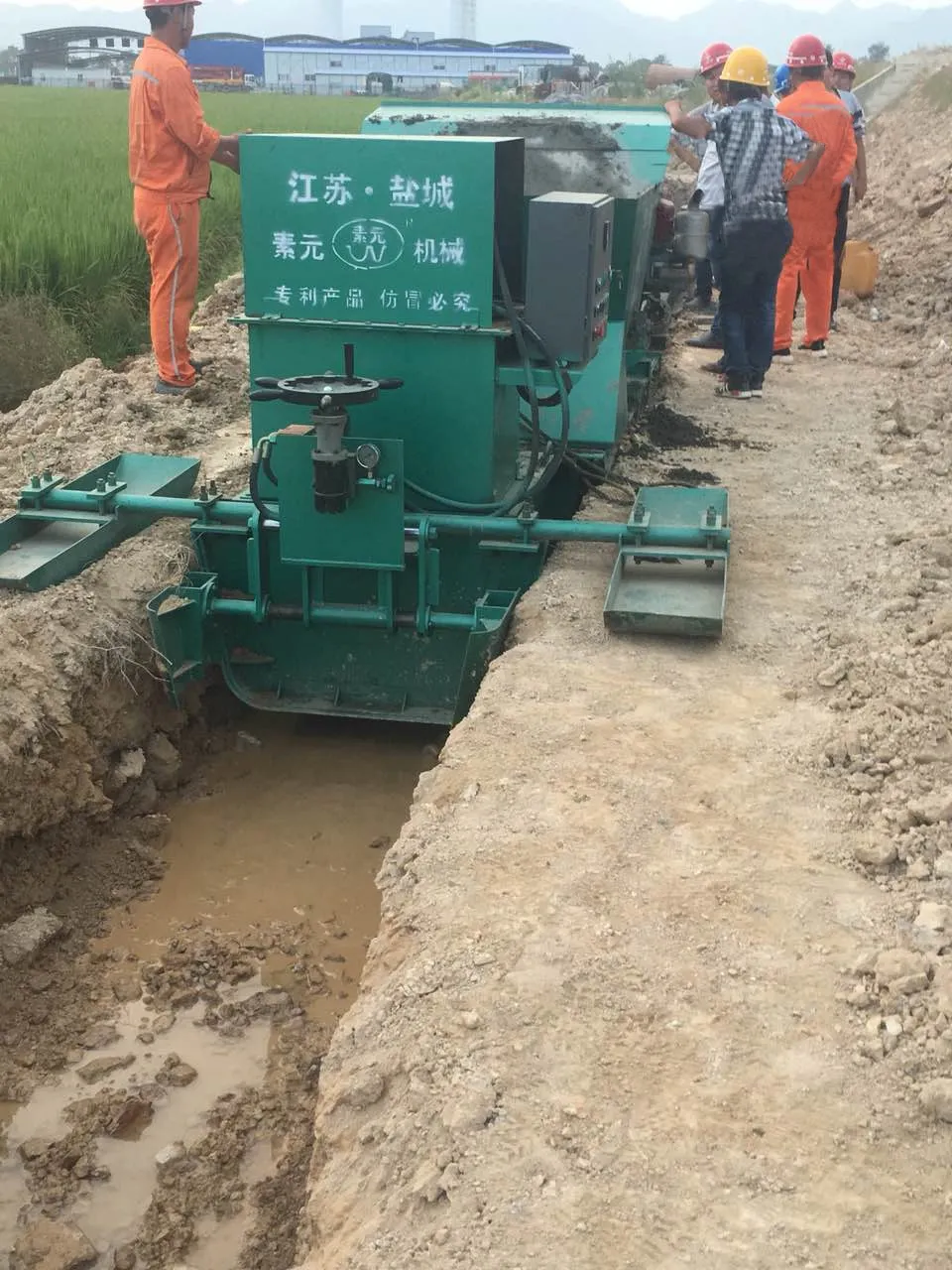
Understanding the Ditch Lining Machine and Its Role in Construction Efficiency
What Is a Ditch Lining Machine and How Does It Work?
Ditch lining machines handle both the digging of water channels and the installation of waterproof barriers all at once. The equipment features spinning blades that carve out those distinctive U-shaped trenches, which can reach depths of around 300 millimeters, before laying down HDPE liners using roller systems that maintain proper tension. Afterward, hydraulic components press the surrounding earth against the liner material, creating pretty solid stability even when dealing with tricky soil types like sand. Field tests indicate these automated systems cut down on soil movement compared to traditional hand digging methods by roughly a third, while also making water distribution much more accurate in dry areas where every drop counts. Recent studies from SWRT back up these claims, showing improvements that make a real difference for irrigation projects facing water scarcity issues.
Key Components and Automation Features of Modern Ditch Lining Machines
Modern ditch lining machines integrate three core components:
- Ditching assembly: Blades with a 30° inclination optimize trench geometry for structural integrity.
- Membrane deployment: Real-time sensors adjust liner tension to prevent wrinkles and ensure seamless installation.
- Automated compaction: Dual-pressure wheels apply 15 kN of force, ensuring uniform soil density along the entire channel.
Advanced models feature GPS-guided alignment and IoT-enabled diagnostics, reducing installation errors by 62% compared to conventional techniques. With energy consumption as low as 0.668 kW per meter—35% less than manual alternatives—these machines enable daily installation rates exceeding 500 meters.
Applications in Agricultural Irrigation and Infrastructure Projects
The U shape design combined with machine lining has become pretty standard for new underground water storage systems in farming operations, accounting for about 72% of installations these days. Farmers in dry regions report seeing roughly 28% less water lost to evaporation when using these systems compared to older methods. When we look at city infrastructure projects, the benefits are just as impressive. These lined canals help manage rainwater runoff much better because the liners fit so precisely against the canal walls. Municipal engineers tell us this proper fitting cuts down on pipe corrosion problems by nearly half, around 44%. Some recent research from 2023 looked at 47 different infrastructure improvements across the country. What they found was pretty telling: machine lined systems needed about 30% less maintenance work over five years than those installed manually. That kind of durability makes them worth considering for any major water distribution network planning.
Traditional Ditch Construction vs. Ditch Lining Machine: A Side-by-Side Comparison
Time Required: Manual Excavation and Lining vs. Automated Efficiency
Traditional ditch construction relies on crews of 8–10 workers to excavate and line just 50–80 meters per day. In contrast, modern ditch lining machines install 200–300 meters in the same period—a 300% increase in productivity. This efficiency stems from continuous operation and integrated excavation-lining workflows that eliminate downtime between phases.
Labor Demands and Onsite Workforce Reduction with Automation
Automation reduces crew sizes by 60–70%, lowering labor costs by $18–$25 per linear meter. Instead of managing large teams, projects require only 2–3 trained technicians to oversee machine operations. Field supervisors report an 80% reduction in scheduling delays due to labor shortages after transitioning to automated systems.
Quality and Consistency: Precision of Machine-Lined U-Shaped Canals
GPS-guided ditch lining machines maintain depth consistency within ±5 mm, far surpassing the ±30 mm variation typical of manual digging. Liner positioning is controlled within 2–3 mm tolerances, minimizing leakage risks in irrigation systems. These accuracy improvements lead to 40% fewer maintenance interventions over a canal’s 15–20 year lifespan.
Quantifying Cost and Time Savings with the Ditch Lining Machine
Labor Cost Reduction: Data from Real-World Field Deployments
Automated ditch lining reduces labor needs by 30–40% compared to traditional methods. By eliminating repetitive tasks like manual compaction and alignment checks, crews shift focus to quality assurance. In agricultural projects, contractors report average daily labor costs of $1,200 using machines—down from $3,500 with manual crews—a 65% cost saving.
Project Acceleration Metrics: Completing Canal Work in Half the Time
Automated systems install 50–70 meters of lined ditch per hour, completing projects 40–60% faster than manual crews. For example, canal installations that take 14 days manually are finished in 6–8 days with machine assistance. Continuous operation and AI-driven terrain adjustments enable real-time corrections without work stoppages.
Long-Term ROI and Maintenance Advantages Over Traditional Methods
Although initial equipment investment exceeds $200,000, operators typically break even within 18–24 months through labor savings and reduced rework. Machine-lined ditches incur 60% lower maintenance costs over five years due to consistent liner placement and erosion-resistant design. Additionally, automation reduces environmental contamination risks, helping avoid EPA-mandated remediation expenses averaging $740,000 per incident (Ponemon 2023).
Overcome Barriers to Adoption and Scaling Use in Developing Regions
Common Challenges in Implementing Ditch Lining Machine Technology
Getting these technologies adopted in developing areas runs into several problems. The biggest ones? Upfront costs that are just too steep for many businesses, not enough people with the right technical skills around, and general reluctance when it comes to automated systems. According to some research published by Elsevier last year, about half (that's 55%) of all construction companies mentioned money was their biggest problem stopping them from moving forward. Another third plus a bit more (around 38%) talked about how there simply aren't good enough training programs available locally. Most small contractors tend to focus on what they can earn today rather than worrying about efficiencies down the road, which explains why so few are actually switching to machines instead of manual workforces.
Strategies for Integrating Automation into Standard Earthmoving Operations
Getting these systems implemented properly usually requires taking things step by step while training staff along the way. Many experts suggest starting with small irrigation projects first so companies can see firsthand how much money they might save - around 60 to 70 percent less labor costs according to what's happening in Southeast Asia right now. When it comes to funding, blended models work pretty well too. Public private partnerships especially help stretch budgets further. A report from the International Water Management Institute back in 2022 showed something interesting about this approach. They found that when used for similar earthmoving projects, these mixed funding strategies actually cut down on payback time by about three whole years compared to traditional methods.
Future Trends: Rising Demand for Automation in Global Excavation Projects
Global demand for ditch lining machines looks set to expand quite dramatically over the next decade, probably around 11.4% year on year until 2030. Water scarcity issues and the need to upgrade old infrastructure are pushing this growth forward. We're seeing something interesting happening too - developing countries account for nearly half (about 47%) of all new installations right now. Many government agencies are starting to require lined canals because traditional methods waste way too much water, sometimes losing over a third through leaks and evaporation. The recent introduction of electric powered versions has really changed things though. These newer models cut down running expenses significantly, so even small farming groups can afford them now. What used to be limited mostly to big construction projects is slowly making its way into smaller agricultural operations across the world.
FAQ
What are the key components of a ditch lining machine?
A ditch lining machine consists of a ditching assembly, membrane deployment system, and automated compaction features, with advanced models also offering GPS-guided alignment and IoT-enabled diagnostics.
How does a ditch lining machine benefit agricultural irrigation?
Ditch lining machines help reduce water loss by about 28% compared to older methods, making them crucial for efficient water management in dry regions.
What are the main barriers to adopting ditch lining machines in developing regions?
The primary barriers include high upfront costs, lack of technical training, and hesitancy towards transitioning from manual labor to automated systems.